


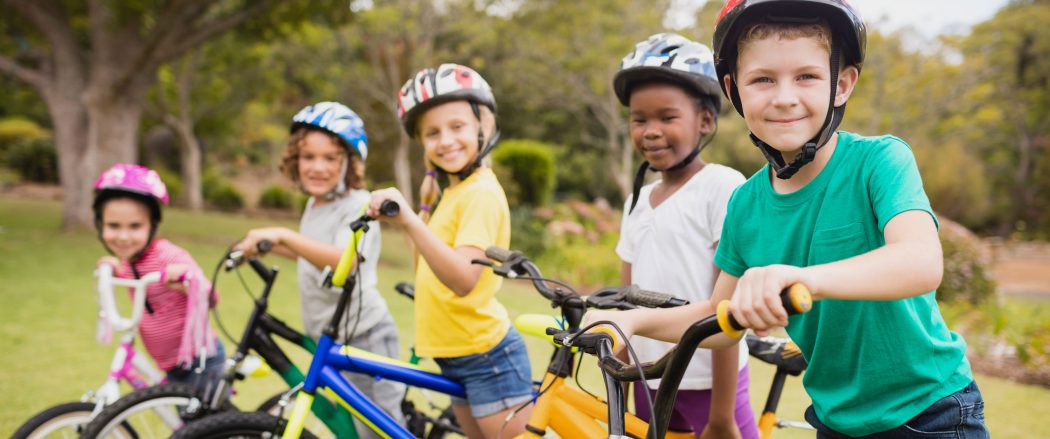
To nurture the skills of resilience is key to providing young people with the ability to cope with stress, adversity, failure and challenges. Resilience is evident when young people have a greater ability to “bounce back” when faced with difficulties and achieve positive outcomes.
Resilience enables an individual to identify discrimination; to make a stand against bullying, aggressive and disrespectful behaviour and to seek support.
The issue locally and nationally
Creating a safe school environment requires more than responding to individual incidents. A whole-school approach helps children and young people develop the knowledge, skills, and confidence to recognise risks, make safe choices, and seek help when needed.
Schools should provide age-appropriate education on a range of safety topics, including road safety, online safety, bullying, knife crime, gangs, abuse, safeguarding, and radicalisation. Learning should be delivered in a sensitive, engaging, and supportive way that reflects the experiences and needs of pupils.
Some children may be more vulnerable to harm or exploitation, including those with additional needs, care experience, family challenges, or previous experiences of abuse. Schools play a vital role in identifying risks early, promoting protective behaviours, and ensuring pupils know where to access support.
Effective safeguarding education should also help pupils:
- Recognise healthy and unhealthy relationships.
- Understand the risks associated with online activity and social media.
- Identify coercive, controlling, or exploitative behaviour.
- Know how to report concerns and seek help for themselves or others.
- Develop the confidence to stay safe in different environments and situations.
A whole-school approach combines education, safeguarding practices, staff training, and strong partnerships with families and local services to create a culture where all children feel safe, supported, and able to thrive.
What is known to work
- Providing a comprehensive spiral PSHE programme to help develop children and young people’s safety skills in a range of contexts. This programme should include regular opportunities to develop skills for assessing risk, developing assertive responses, building awareness of influences and developing confidence to ask for help.
- Teaching about safety skills in a range of contexts, relevant to the location and needs of the pupils.
- Offering opportunities to risk management and safety skills through day-to-day classroom management and wider enrichment and pastoral opportunities.
- Providing development opportunities for staff to ensure that they can model and reinforce skills to assess and manage risk and ask for help.
- Raising awareness and skills for staff through training and certification processes. Staff should also be aware of approaches to avoid in safety education e.g. scare tactics, revictimisation and should be secure in building positive, safe learning environments.
For further resources please see: PSHE Education lesson plans
Key actions for schools to take
Your workforce
- Schools should up-skill their staff on current local and national safety and safeguarding themes and how to access support.
- Schools should gauge the needs of pupils and the risks most relevant to them through formal and informal methods.
- Ensure that staff are supported with appropriate resources to teach safety skills, following best practice guidelines.
Engage student voices
- Enhancing children and young peoples’ opportunities of providing responsible peer support.
- Create safe environments.
Evaluate and monitor
Evaluation and monitoring can provide motivation by showing the activity or support is effective, meaningful and purposeful. It can also provide the school with evidence of good safe practice.
By the end of primary school pupils should know
- How to build healthy friendships, recognise trusted adults, and seek help when something feels wrong.
- The importance of boundaries, consent, privacy, and respecting themselves and others.
- How to stay safe online, recognise risks, and report concerns.
- That people online may not always be who they say they are.
- How to recognise unsafe, inappropriate, or abusive behaviour, both online and offline.
- That their body belongs to them and how to respond to situations that make them feel unsafe.
- Where to access support and how to report concerns or abuse.
- The risks associated with harmful substances, including smoking, alcohol, and drugs.
- Basic first aid skills and how to contact emergency services.
- How to stay safe and healthy in everyday situations, including online and outdoors.
Schools may also choose to include additional safety education on topics such as road safety, water safety, railway safety, fire safety, and animal safety.
Source: Relationships Education RSE and Health Education (DfE) Relationships Education, Relationships and Sex Education and Health Education guidance (publishing.service.gov.uk)
By the beginning of secondary school pupils should know
- How to recognise healthy and unhealthy relationships, identify trusted sources of support, and seek help when needed.
- The importance of respect, equality, boundaries, privacy, consent, and managing conflict in all relationships, including online.
- That behaviours such as coercive control, harassment, sexual violence, abuse, and exploitation are unacceptable and may be criminal offences.
- The laws and responsibilities relating to equality, consent, safeguarding, and personal safety.
- How to stay safe online, manage digital risks, and report harmful content, bullying, abuse, or harassment.
- The legal and emotional consequences of sharing personal or explicit content online.
- How to recognise and respond to grooming, domestic abuse, forced marriage, honour-based abuse, FGM, and other forms of exploitation.
- The risks associated with alcohol, smoking, vaping, drugs, and addiction, including how to access support.
- Basic first aid, CPR, and the purpose and use of defibrillators.
- That everyone has the right to be treated with respect and should show respect and tolerance towards others.
Schools may also choose to include additional learning on topics such as road safety, water safety, railway safety, fire safety, knives and gangs, Prevent, and animal safety.
Source: Relationships Education, Relationships and Sex Education (RSE) and Health Education Guidance (DfE).
Local Support

Cambridgeshire and Peterborough Safeguarding Adults and Children Board
Multi-agency safeguarding training is important for supporting the collective understanding of local need and for practitioners to be effective in universal services and across the safeguarding pathway. This spans from early help through to targeted and specialist services. To be effective, practitioners need to continue to build their knowledge and skills and be aware of
Read More About Cambridgeshire and Peterborough Safeguarding Adults and Children Board
Cambridgeshire Fire and Rescue Service
Teaching fire safety in schools The Fire and Rescue Service provide free fire safety education to children in primary and secondary schools within Cambridgeshire and Peterborough. Our fire crews, community fire safety officers and community champions carry out interactive educational workshops in schools and at fire stations, reaching out to thousands of Key Stage 1,
Read More About Cambridgeshire Fire and Rescue Service
EAAA
Free Basic Life Support Training East Anglian Air Ambulance has funding to provide free CPR and AED training in schools, to staff and pupils (from Yr 5/6). Each session is approximately an hour long but it can be delivered flexibly to fit around school timetables and pupil needs. Sessions can also take place throughout the
Read More About EAAA
Embrace Child Victims Of Crime
Helping young crime victims and witnesses recover from trauma Embrace Child Victims Of Crime is a specialist support service for young victims and witnesses to crime on behalf of the Police and Crime Commissioner for Cambridgeshire and Peterborough. The aim of the Cambridgeshire-based charity is to help children, young people, and families from all over
Read More About Embrace Child Victims Of Crime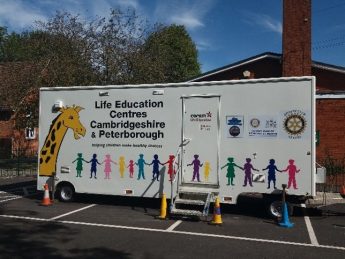
Life Education Cambridgeshire & Peterborough
Life Education is a primary prevention programme focusing on drug and health education. We explore with young people how amazing their bodies are and how the human body can be affected by drugs. We develop understanding around physical and mental health. Through the ‘life skills’ approach, children are enabled to practise how to make healthy
Read More About Life Education Cambridgeshire & Peterborough
Nessie
Nessie is commissioned by Cambridgeshire County Council to provide free support to families of children and young people who self-harm. Nessie will be offering: parent workshops across Cambridgeshire schools, in community settings and online targeted 1-1 parent support telephone and online parent support school based group support for targeted group of young people NESSie is
Read More About NessieNSPCC
Whether you’re looking for advice, or are worried about a child, the NSPCC have got a range of helplines to support you. While we understand that your school will have procedures and policies in place for safeguarding issues, we recognise that if you’re working with and supporting children and families, sometimes you might need to
Read More About NSPCC
Road Safety Education for Schools
Road Safety Education for Schools The Cambridgeshire road safety team have a wide range of road safety resources and schemes available that are specially designed for different school age groups. Early Years Road Safety Education A child can learn a lot about road safety through play. It may be something as simple as identifying traffic
Read More About Road Safety Education for Schools
Road Safety Peterborough – Initiatives and Campaigns
The Travelchoice and Road Safety team at Peterborough City Council offer many free resources, workshops and support to help schools encourage staff, pupils and parents to travel to school in a safe, healthy and sustainable way. We work with a range of expert partners to offer a huge variety of free initiatives, projects, campaigns and
Read More About Road Safety Peterborough – Initiatives and Campaigns
SAFE
We are a voluntary service focused on supporting young people identified by services as being at significant/moderate risk of Criminal Exploitation within Cambridgeshire and Peterborough. We can work with young people up to the age of 17, currently we have no minimum age restriction. We take referrals from a range of statutory and community services
Read More About SAFESORTS Team, Department of Psychiatry, University of Cambridge
Researchers at the Department of Psychiatry, University of Cambridge have produced a set of FREE resources to help school and college staff provide a supportive response to students who self-harm. The resources have been co-developed with mental health professionals, school staff and young people as part of a research project funded by the National Institute
Read More About SORTS Team, Department of Psychiatry, University of CambridgeResources
Documents
Teacher Guidance
- DfE Cyberbullying advice for Head Teachers
- DfE First Aid Guidance for Schools
- DfE Health and prevention training module (primary)
- DfE Health and prevention training module (secondary)
- DfE Preventing and tackling bullying Advice for headteachers, staff and governing bodies
- HM GOV Working Together to Safeguard Children
- HM GOV Working Together to Safeguard Children A guide to inter-agency working
- Young Minds addressing adversity book
External Links
- Barnardos – Supporting Young People
- Barnardos Helping Families
- CEOP Thinkuknow – Online and offline safety – Professionals Site
- CEOP Thinkuknow – Parents Site
- ChildLine – Bullying, abuse, safety & the law
- Childline – Somethings not right
- GOV.UK County Lines Guidance for Schools
- National Schools Partnerships
- NSPCC Child Protection in Schools Online Course
- NSPCC Criminal Exploitation and Gangs
- NSPCC It’s NOT OK resources
- NSPCC Relationships for Students With Learning Disabilities 11+
- NSPCC Safeguarding self-assessment tool
- NSPCC Safer Recruitment in Education Training
- NSPCC School delivery
- Safeguarding Children & Young People from Sexual Assault
- Survivors UK – male rape and sexual abuse support
- TES Dog Safety Resources
- UK Safer Internet Centre